Moon•3 min read
Orange Glass in the Lunar Valley: The Last Human Drive on the Moon
Apollo 17 LRV • Taurus-Littrow, Moon
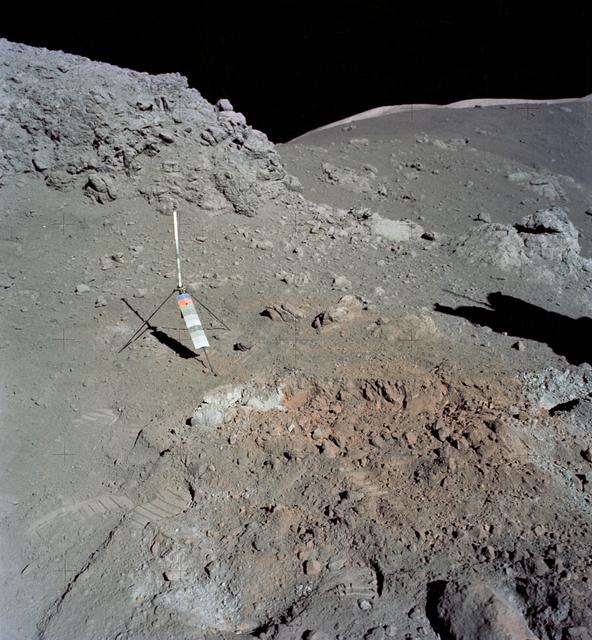
In December 1972, Apollo 17 landed in the narrow valley of Taurus-Littrow. Astronaut Harrison Schmitt, a trained geologist, drove the lunar rover thirty-five kilometers across boulder fields and steep hillsides.
At a stop called Shorty Crater, Schmitt looked down at his boots and shouted in surprise. The dark lunar soil had turned bright orange. He used a core tube to collect samples of the colorful dirt.
When scientists examined the soil in laboratories on Earth, they discovered millions of microscopic orange glass beads. Three and a half billion years ago, giant fire fountains had erupted on the Moon, throwing molten spray into the sky that cooled into glass droplets before hitting the ground.